
Technical specifications

Data for architects and engineers.

Full SANS and International Standards list, block dimensions, mortar and render tables, design standards, performance comparisons, and downloadable data sheets — everything needed to specify Aertec AAC.

01 · Why AAC

Key advantages over conventional masonry.

AAC combines structural performance with significant construction-efficiency and environmental advantages. All apply when Aertec products are specified and installed to system requirements.

Reduced structural dead load
Lightweight blocks reduce loading on frames and foundations, enabling substantial cost savings on structural elements.
3× faster installation
Larger format and lighter weight means laying teams cover the same wall area three times faster than conventional masonry.
Solid wall — lower cost than dry-walling
Provides a solid masonry wall at a cost below proprietary dry-wall systems, with better acoustic and fire performance.
Faster, neater service chasing
Soft, workable texture makes electrical and plumbing chasing quicker and cleaner — hand saw or router tool, minimal debris.
Dimensional accuracy reduces waste
Tight manufacturing tolerances enables 3 mm thin-bed mortar joints and thinner render coats, cutting material waste to 3–5%.
Direct tile and skim-coat application
Tiles and skim coats bond directly to the AAC face without a plaster undercoat — eliminating a full plastering stage.
Moisture management
Closed-cell structure diffuses moisture vapour, preventing condensation and mould — reducing maintenance and improving indoor air quality.
Non-combustible — superior fire rating
AAC does not contribute to fire spread and achieves a superior 4hr fire rating compared with clay brick and concrete block.
7.5× better thermal insulation
Significantly more thermally insulated than clay brick (7.5×) and concrete brick (12.5×), reducing HVAC energy load across the building lifetime.
Green product — low embodied energy
AAC generates 11 kg CO₂/m² versus 129 kg/m² for clay brick — one of the lowest embodied-carbon masonry options available in South Africa.
Cuts to any shape with a hand saw
On-site shaping, scribing, and cutting is quick and easy by using a simple AAC handsaw.
Proprietary 3 mm thin-bed mortar
Aertec ATC thin-bed mortar bonds at 3 mm joints — reducing waste, improving thermal performance and setting faster with a stronger bond compared with conventional mortar.
Seismic performance
High strength-to-mass ratio gives better seismic tolerance than dense conventional masonry, relevant for Cape Town and Western Cape projects.
02 · Block dimensions

Standard block sizes.

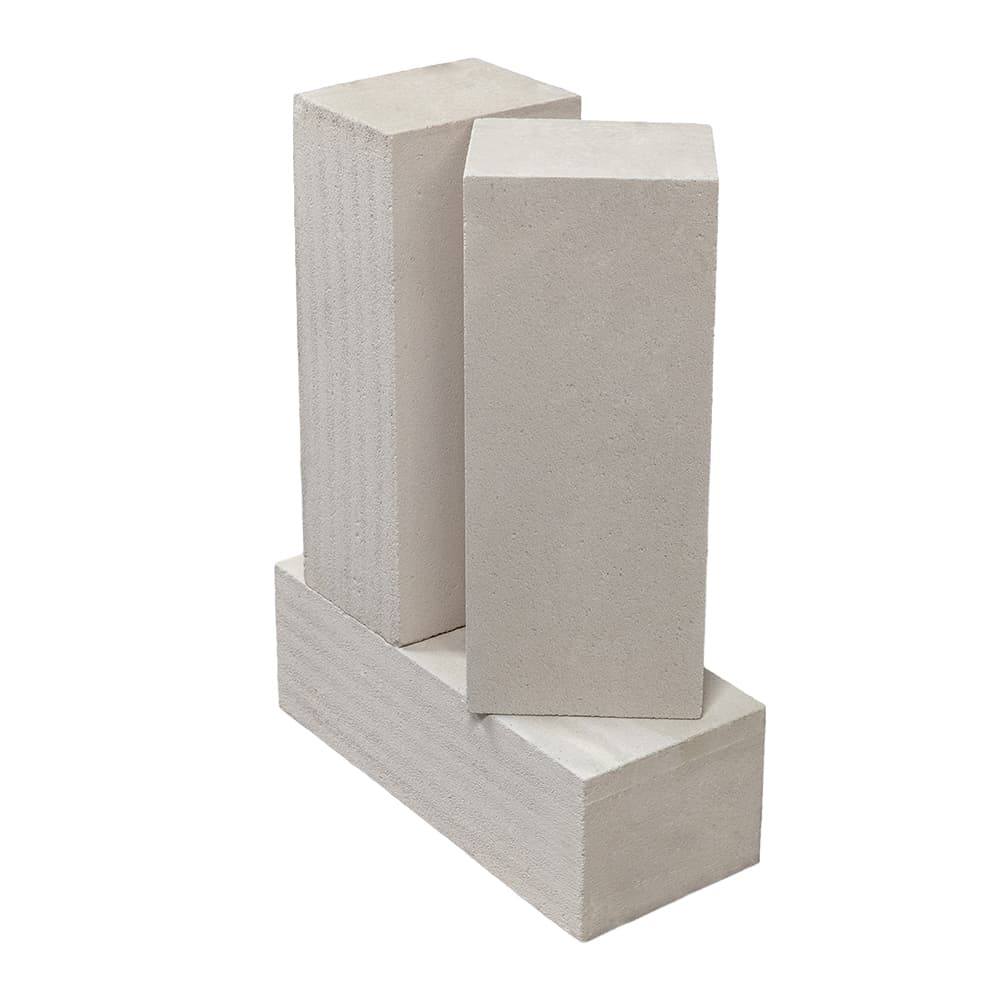
All blocks are 600 mm long × 250 mm high. Width varies by series and structural requirement. Block waste allowance: 3–5%.
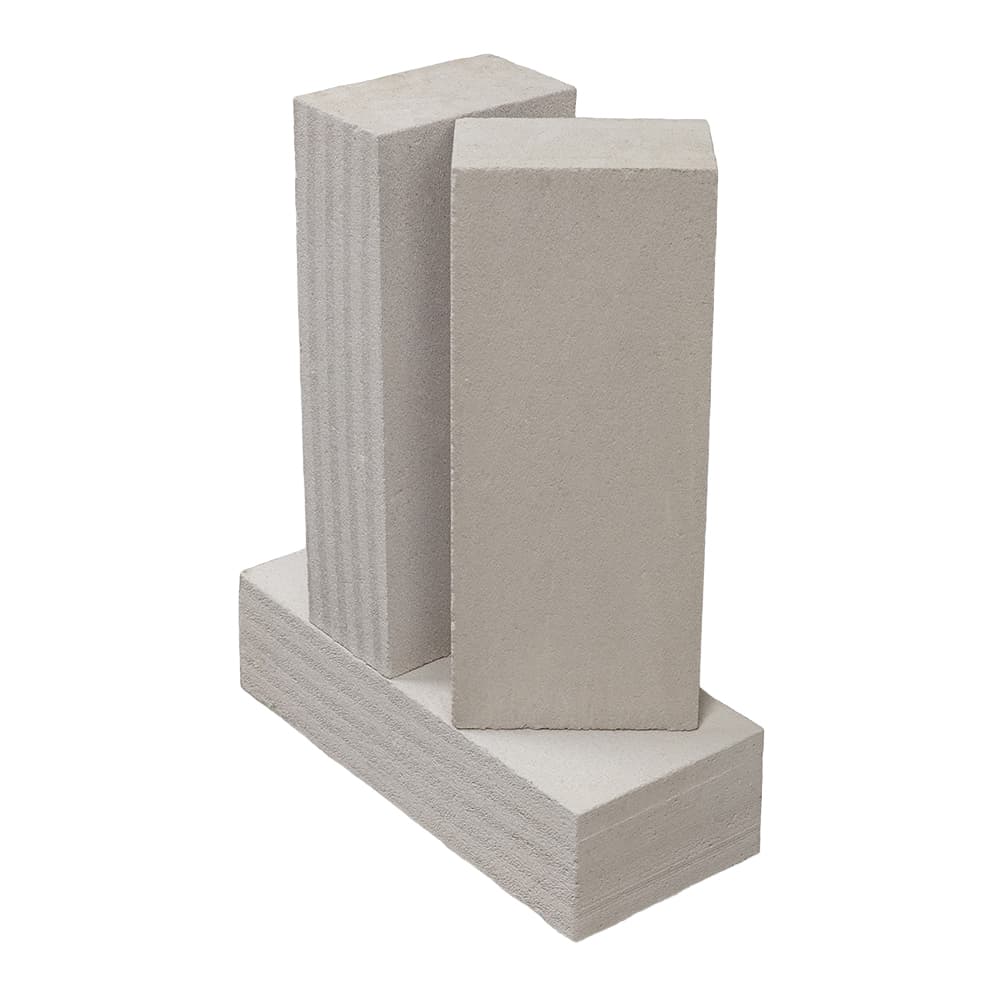
AD / 525 Precision Block
AH / 600 Higher-Density Block
SeriesL × W × H (mm)Units / m²Density kg/m³Structural use
AD600 × 100 × 2506.67525Internal partition wall
AD600 × 150 × 2506.67525Internal dividing wall
AD600 × 200 × 2506.67525External wall or dividing wall
AH600 × 100 × 2506.67600Internal partition wall
AH600 × 150 × 2506.67600Internal dividing wall
AH600 × 200 × 2506.67600External wall or dividing wall
03 · Application data

Mortar consumption & render thickness.

ATC Thin-bed mortar

3 mm joint thickness — kg per m² of wall area:

Wall widthMortar / m²
100 mm2.4 kg / m²
150 mm3.6 kg / m²
200 mm4.8 kg / m²
CEM-SKIM / cement plaster

Recommended render thickness per application:

ApplicationThickness
External — outside face10–12 mm
External — inside face8–10 mm
Internal walls5–8 mm
Gypsum plaster

Recommended render thickness per application:

ApplicationThickness
External — inside face8–10 mm
Internal walls5–8 mm
04 · Design standards

SANS & international specifications.

Aertec AAC products are specified and designed under South African National Standards and their European equivalents. Engineers should size load-bearing elements against SANS 51996-1-1.

StandardTitleNotes
SANS 50771-4Autoclaved aerated concrete masonry unitsProduct standard for AAC blocks — dimensional and performance requirements
SANS 51996-1-1Masonry structures — general rulesDesign of reinforced and unreinforced AAC masonry
SANS 51996-1-2Structural fire design of masonryFire design method for masonry structural elements
SANS 51996-2Design considerations, materials and executionMaterial properties and execution standards for masonry works
SANS 51996-3Simplified calculation methodsSimplified design rules for standard residential and commercial masonry
EN 771-4Specification for masonry units — AACEuropean product standard — basis for CE Marking and SANS adoption
EN 998-2Specification for masonry mortars — thin-bedPerformance requirements for the Aertec ATC thin-bed mortar paste
05 · Performance data

AAC vs conventional masonry.

Case study rows are based on a verified 6-storey student accommodation project in Cape Town using Aertec AAC for external hybrid cavity walls and internal partitions on a reinforced concrete frame.

MetricAertec AAC performance
Laying speed3× faster than conventional masonry
Thermal insulation7.5× better than clay brick; 12.5× better than concrete brick
Block density400–600 kg/m³ · clay brick 1,900 kg/m³ · concrete block 1,400–2,200 kg/m³
Carbon footprint11 kg CO₂/m² · clay brick 129 kg CO₂/m²
Construction water0.39 L/m² · clay brick 2.4 L/m² · concrete block 0.9 L/m²
Site waste3–5% (block + mortar combined)
Fire ratingNon-combustible — superior 4hr fire rating vs common masonry materials
AcousticHighly sound-absorbent; effective between rooms and from external sources
Climate controlReduces HVAC energy costs up to 30% over building lifetime
Foundations (case study — 6-storey)21% saving vs conventional masonry
Slabs (case study)27% saving vs conventional masonry
Columns (case study)35% saving vs conventional masonry
Construction time (case study)48% reduction vs conventional masonry
Total project cost (case study)21% saving vs conventional masonry
06 · Certifications

Factory certification register.

Certificates and compliance documentation are available on request. For design standards, refer to section 04 above.

ISO 9001:2015
Quality management — factory production control
ISO 14001:2015
Environmental management system
ISO 18001:2015
Occupational health & safety management
CE Marking
European conformity — product performance declaration
07 · Data sheets

Download product data sheets.

All data sheets are current revisions. For the Technical Guidelines Booklet or specific project documentation, contact Aertec directly.

Need the Technical Guidelines Booklet?

The full booklet, project-specific design tables, documentation is available on request.

AAC Technical Specifications | Block Sizes, Mortar, SANS Standards & Data Sheets | Aertec